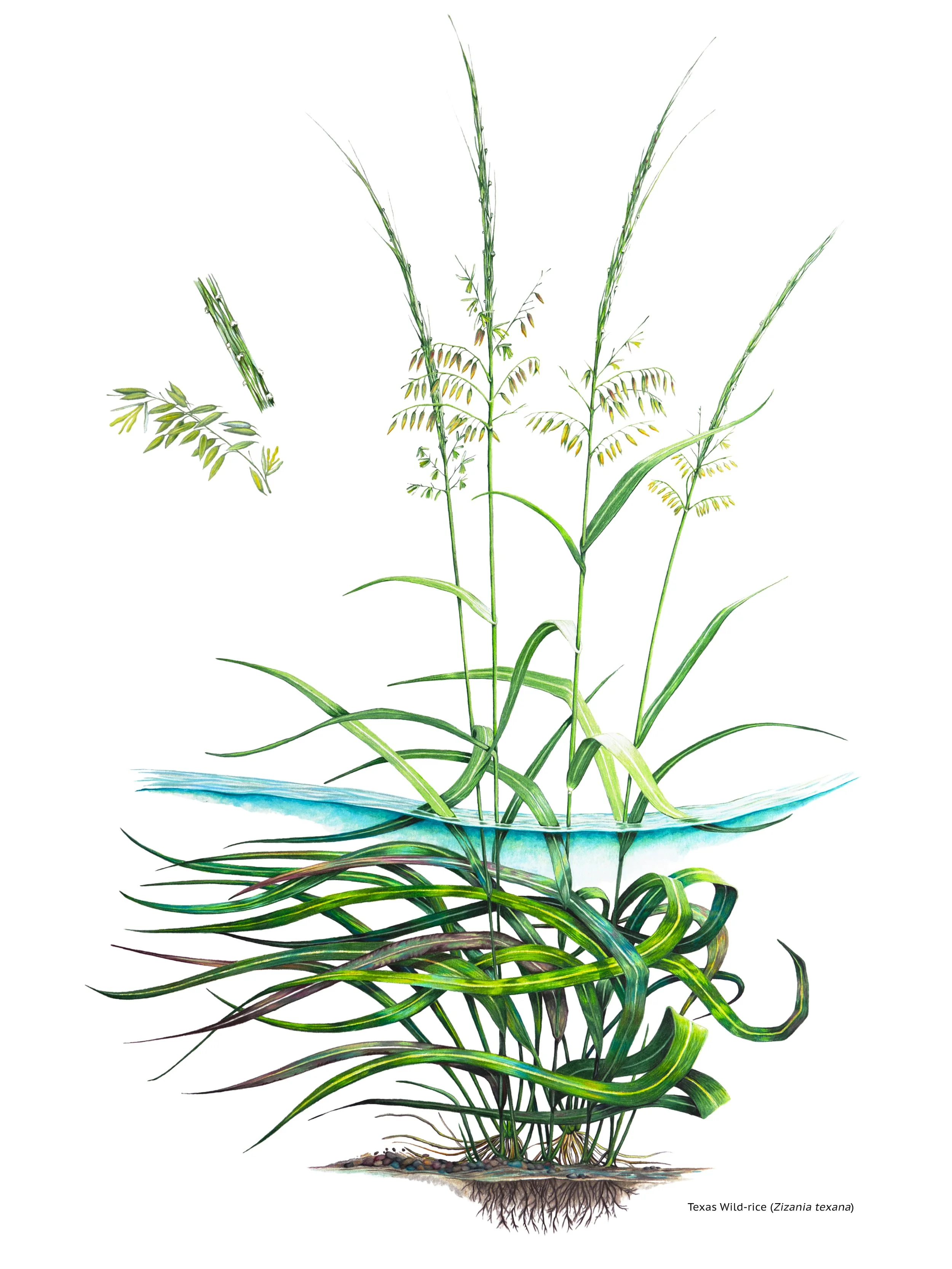
Texas Wild-rice (2026)
Colored Pencil on Cold Press Bristol, 20” x 30” (50.8 × 76.2 cm)
Species featured: Texas Wild-rice (Zizania texana)
“Texas wild rice is a submergent aquatic perennial grass with leaves that are 3 to 6.5 feet long. Texas wild rice forms large stands at depths from 0.76 to 3.3 feet and requires clear, relatively cool, thermally constant flowing water of about 72°. Texas wild rice prefers gravel and sand substrates overlaying Crawford black silt and clay. Spring flow is critically important for growth and survival of Texas wild rice. Texas wild rice relies on high levels of carbon dioxide from spring water, for its inorganic carbon source for photosynthesis, rather than the more commonly available bicarbonate, which is used by most other aquatic plants. Low flow situations can be carbon-limiting for carbon dioxide-using obligates, including Texas wild rice.
Texas wild rice is only found in the San Marcos River. Texas wild rice was listed as endangered on April 26, 1978 (43 FR 17910). Reduced spring flow is the greatest threat to the survival of Texas wild rice. Other threats include water quality degradation, physical alteration of Spring Lake or the San Marcos River, physical disturbance of the species and non-native species. We work with our partners to ensure that the springs and groundwater will continue to provide clean and healthy freshwater to related microhabitats and to support the important life history and biological research to address the needs for the species. Efforts are underway by partners to reduce non-native vegetation in the river.”
Sourced from U.S. Fish & Wildlife Service.
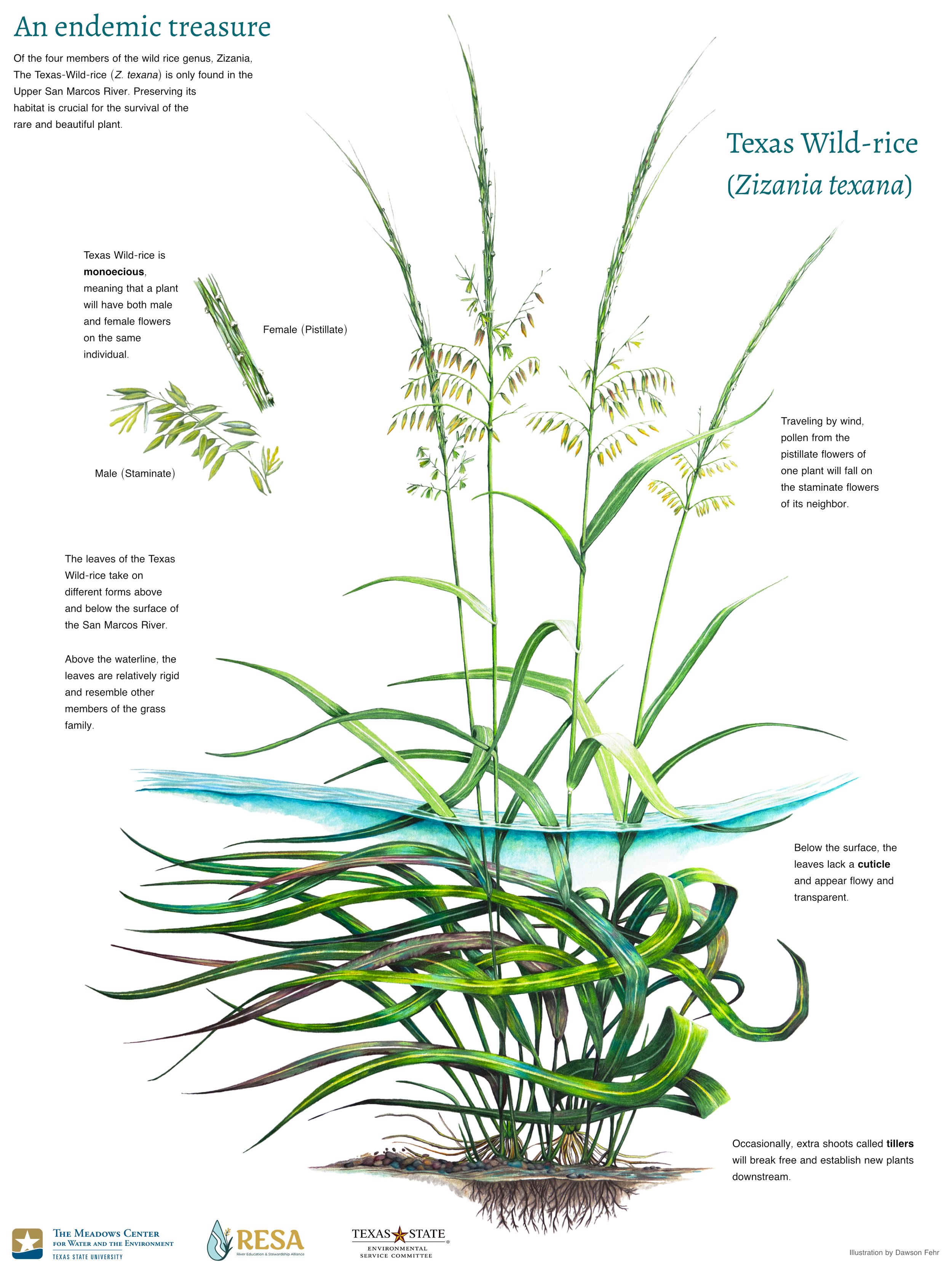
My time spent working for the River Education and Stewardship Alliance (RESA) at Texas State University has been spent developing vibrant artwork that showcases the plant and animals that call the Upper San Marcos River system home. For more information about RESA and what we do, consider checking out our page below: